
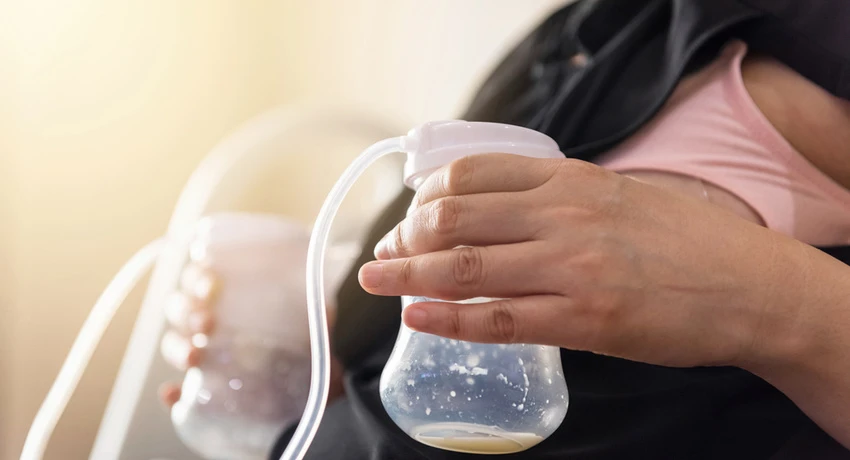

Why pumping and breastfeeding give different amounts
Your body makes milk based on removal, but a pump removes milk differently than a baby does.
A baby with typical oral function adjusts suction and rhythm feed to feed, while a pump runs on a fixed pattern that doesn't respond to your letdown the way a baby does. Stress, unfamiliar surroundings, and even the size and shape of flange you're using can all change how much comes out in a session, without any of it reflecting how much milk you're actually producing.
Why "baby is more efficient than a pump" isn't true for everyone
The idea that a baby always removes milk better than a pump assumes a baby can maintain a latch and have effective milk transfer.
A baby with oral restrictions, such as tongue, lip and/or buccal ties doesn't always fit that assumption, and can sometimes transfer less milk at the breast than a pump would in the same session. This matters because it flips the usual reassurance around. If your baby also seems to struggle at the breast, a low pump number isn't automatically something to shrug off.
When a low pumping volume is worth a closer look, and when it isn't
Not every disappointing pumping session points to the same problem.
A single low session after a stressful morning is different from a pattern that's been dropping over several weeks. A baby who seems satisfied, is gaining weight, and has consistent diaper output is telling you something different than a baby who seems hungry after a full feeding. A container with low milk volume in a baby who also struggles at the breast, with a shallow latch, slow weight gain, or a feed that never seems to finish, is a different situation than a low pump number in a baby who nurses easily. Treating every dip the same way, whether it's caused by timing, stress, flange fit, a genuine supply issue, or something going on with your baby's feeding at the breast, means you might chase the wrong fix.